


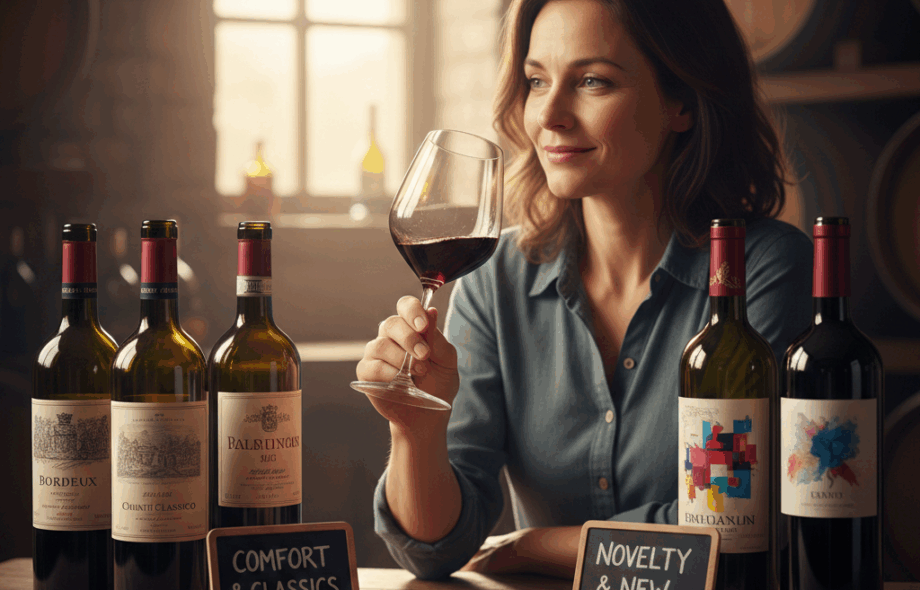
When people talk about wine preferences, they often assume taste develops through exploration and discovery. While that can be true, familiarity plays a much larger role than most realise. The wines you return to again and again often feel more enjoyable-not necessarily because they are better, but because they are familiar.
Understanding how familiarity shapes wine preferences helps explain why certain bottles feel comforting, why favourites rarely disappoint, and why new wines sometimes feel underwhelming at first.
Why Familiar Wines Feel Better
Familiarity creates comfort. When you know how a wine will taste, how it will make you feel, and when it fits into your routine, there is little mental effort involved.
This ease allows you to relax. Relaxation improves enjoyment. The wine itself has not changed, but your openness to the experience has.
The Brain Loves Predictability
The human brain is wired to prefer predictability. Familiar experiences require less energy to process, which often makes them feel more pleasant.
With wine, this means familiar styles are often enjoyed more easily. There is no uncertainty, no second-guessing, and no disappointment from unmet expectations.
How First Impressions Influence Taste
First experiences with wine leave strong impressions. A wine enjoyed during a good moment often becomes a favourite. Conversely, a wine tasted during stress or discomfort may be unfairly judged.
These early impressions shape future preference, sometimes more strongly than the wine itself deserves.
Familiarity Builds Confidence
When you drink wines you know you enjoy, confidence grows naturally. You stop questioning your choices and start trusting your taste.
This confidence improves enjoyment because doubt disappears. You are no longer analysing-you are simply enjoying.
Why New Wines Can Feel Disappointing
New wines introduce uncertainty. Even good wines may feel unfamiliar or unbalanced simply because they differ from what you are used to.
This does not mean the wine is poor. It means your palate has not adjusted yet. Familiarity takes time.
Repetition Refines Taste
Repeated experiences help the palate recognise patterns. Over time, you begin to understand what you enjoy without thinking about it.
This refinement happens naturally. You do not need to study wine to develop taste-repetition does the work.
Comfort vs Curiosity
Familiarity often competes with curiosity. Comfort encourages repetition, while curiosity encourages exploration.
Neither is better. The healthiest wine enjoyment usually comes from balance-familiar favourites supported by occasional discovery.
Why Familiar Wines Feel Right in Routine
Many people drink wine as part of routine-after work, with dinner, or during quiet evenings. Familiar wines fit smoothly into these routines.
They do not interrupt the moment. Instead, they support it.
Familiarity and Emotional Connection
Familiar wines often carry emotional meaning. They remind you of people, places, or phases of life.
This emotional layer deepens enjoyment and explains why some wines feel special even if they are simple.
Avoiding the Trap of Overthinking
When people chase novelty constantly, wine can become tiring. Too many new experiences demand attention and evaluation.
Familiar wines offer rest from this mental effort. They allow wine to be enjoyed without thought.
Allowing Taste to Change Naturally
Familiarity does not mean stagnation. Over time, familiar wines may lose appeal, and new favourites emerge.
This change happens naturally when curiosity is allowed without pressure.
Using Familiarity to Explore Gently
One of the best ways to explore wine is by staying close to what you already enjoy. Familiarity becomes a guide rather than a limitation.
Small changes feel safer and more enjoyable than dramatic shifts.
A Personal Relationship with Wine
Familiarity creates a personal relationship with wine. Wine stops being a product and becomes part of your rhythm.
This relationship is built on trust rather than excitement.
Conclusion
Familiarity shapes wine preferences more than most people realise. Familiar wines feel better because they reduce uncertainty, build confidence, and fit comfortably into everyday life.
This does not mean exploration should stop. It simply means familiarity deserves respect. When you understand its role, you can enjoy wine with greater ease-balancing comfort with curiosity and letting enjoyment lead the way.
📥 Download Vinora – Your Companion in the World of Wine
📱 iOS: Vinora on iOS
📱 Android: Vinora on Android
📸 Follow Us for Updates
Instagram: @vinora_official
 :
https://uk.pinterest.com/vinora_official/
:
https://uk.pinterest.com/vinora_official/