

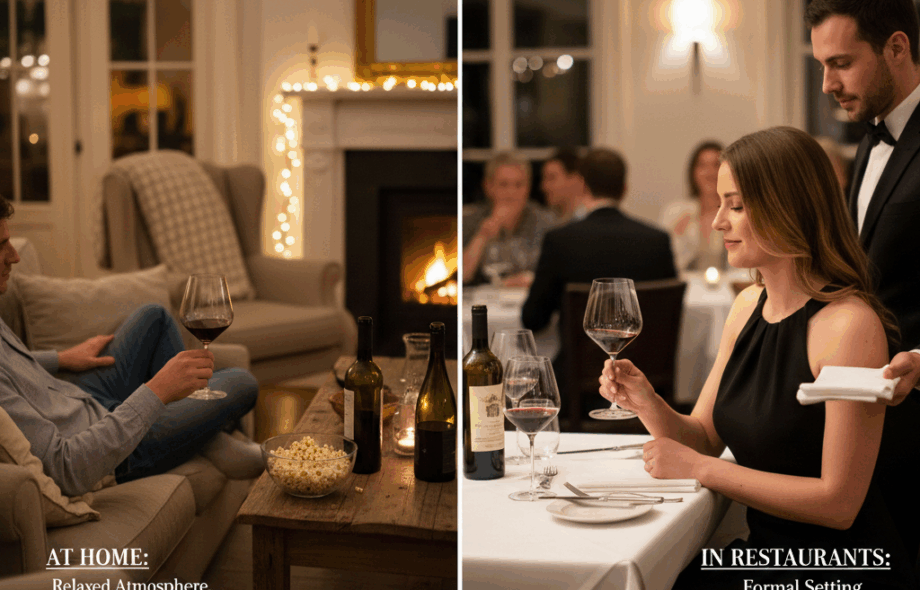
Many people have had this experience: a wine tasted in a restaurant feels wonderful, yet the same bottle enjoyed at home feels different. Sometimes it feels less exciting, less smooth, or simply not the same. This can be confusing and even disappointing. However, this difference is not a sign that something is wrong with the wine. It is a natural result of context, mindset, and environment.
Understanding why wine feels different at home compared to restaurants can help you enjoy wine more fully in both settings.
The Power of Atmosphere
Restaurants are carefully designed environments. Lighting, music, seating, and pacing are all created to enhance comfort and enjoyment. This atmosphere relaxes the mind and heightens the senses.
At home, the environment is often more practical. Bright lights, distractions, or daily routines can interrupt the experience. These differences affect how wine is perceived, even when the wine itself is identical.
Anticipation and Expectation
When ordering wine in a restaurant, anticipation plays a large role. Choosing a bottle, waiting for it to arrive, and seeing it served creates a sense of occasion. This anticipation increases enjoyment before the first sip.
At home, wine is often opened quickly and casually. Without anticipation, the experience may feel less special, even though the wine has not changed.
Social Context Matters
Wine in restaurants is often shared. Conversation, company, and shared attention enhance the experience. Social enjoyment makes flavours feel richer and moments more memorable.
At home, wine may be enjoyed alone or while multitasking. Without social interaction, attention may be divided, reducing perceived enjoyment.
The Role of Distraction
Restaurants remove many distractions. Phones are put away, meals are paced, and attention is directed towards the table. This focus allows wine to be experienced more clearly.
At home, distractions are everywhere-television, phones, chores, or thoughts about the next task. These distractions reduce sensory awareness.
Why Service Changes Perception
Professional service adds to the experience. Wine is presented carefully, glasses are chosen intentionally, and timing is considered. This care signals importance to the mind.
At home, service is informal. While this is comfortable, it may lack the cues that tell the brain to slow down and enjoy.
The Psychology of Occasion
Restaurants create a sense of occasion. Eating out feels different from eating at home because it breaks routine. Wine benefits from this psychological shift.
When wine becomes part of routine at home, it may lose some perceived excitement unless intention is added.
Price and Perceived Value
Wine often feels more valuable in restaurants due to pricing and context. Paying more can subconsciously increase expectation and perceived quality.
At home, without this price signal, the same wine may feel more ordinary.
Why Home Wine Can Still Be Enjoyable
Despite these differences, home is not a lesser place for wine. In fact, it offers something restaurants cannot-comfort, privacy, and freedom from judgement.
Wine at home can be deeply enjoyable when attention and intention are present.
Creating Restaurant-Like Enjoyment at Home
You do not need to copy a restaurant. Small changes help: dimmer lighting, fewer distractions, sitting down properly, or taking a moment before the first sip.
These small cues tell the mind that this moment matters.
Embracing the Difference
Rather than comparing home wine to restaurant wine, it helps to embrace their differences. Restaurants offer excitement and atmosphere; home offers comfort and intimacy.
Both experiences are valuable in their own way.
Wine as a Reflection of Setting
Wine reflects the setting in which it is enjoyed. This does not reduce its quality-it highlights the importance of context in enjoyment.
Understanding this helps remove disappointment and increase appreciation.
Conclusion
Wine feels different at home than in restaurants because enjoyment is shaped by atmosphere, attention, expectation, and social context. The wine itself has not changed-only the experience around it has.
By bringing small moments of intention into home wine enjoyment, you can create experiences that feel just as meaningful. Wine does not need a restaurant to shine; it simply needs attention, comfort, and presence.
📥 Download Vinora – Your Companion in the World of Wine
📱 iOS: Vinora on iOS
📱 Android: Vinora on Android
📸 Follow Us for Updates
Instagram: @vinora_official
 :
https://in.pinterest.com/vinora_official/
:
https://in.pinterest.com/vinora_official/