
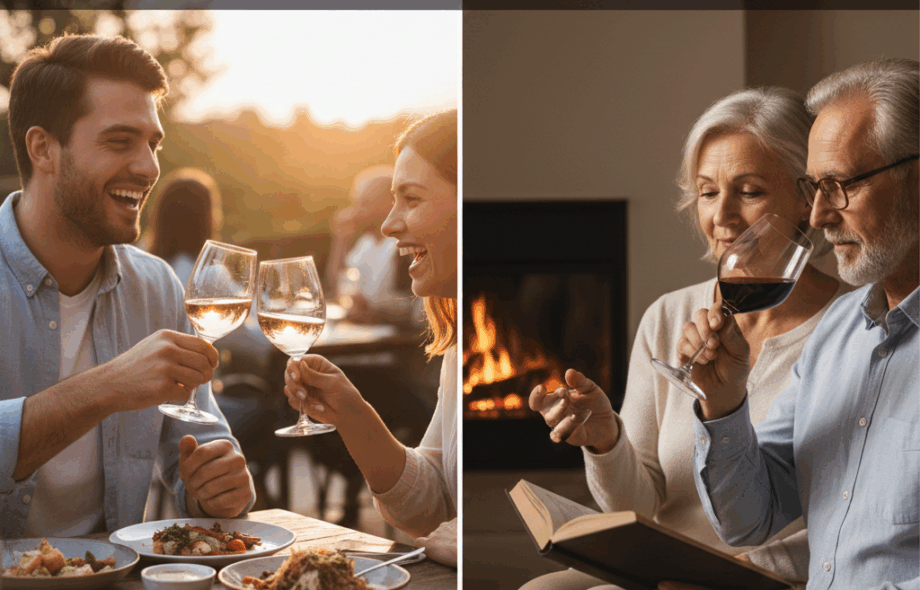
Many people notice that their relationship with wine changes over time. A wine you loved years ago may no longer appeal to you, while styles you once avoided suddenly feel enjoyable. This shift can feel surprising, but it is completely natural. Wine enjoyment evolves as life changes, experiences grow, and priorities shift.
Understanding why wine enjoyment changes with age helps you appreciate wine more honestly and without self-judgement.
Taste Is Not Fixed for Life
One of the biggest myths about wine is that taste remains the same. In reality, taste is flexible and constantly evolving. As you get older, your senses change slightly, but more importantly, your relationship with food, drink, and pleasure develops.
What you enjoy today reflects who you are now-not who you were years ago.
Early Wine Experiences Shape Preferences
Many people’s early wine experiences are shaped by social situations, affordability, and availability. Younger wine drinkers often choose wines that are easy, obvious, or popular among peers.
These early preferences are not permanent. They are starting points. As experience grows, curiosity often replaces imitation.
Life Experience Changes Perspective
As people get older, they often become more comfortable trusting themselves. This confidence affects wine enjoyment. There is less desire to impress and more interest in comfort and balance.
Wine choices become less about image and more about how they fit into real life.
Changing Lifestyle, Changing Wine
Lifestyle plays a major role in wine preferences. Busy schedules, family life, work responsibilities, and health awareness all influence how and when wine is enjoyed.
Many people begin to favour wines that feel lighter, calmer, and more balanced rather than intense or demanding. This does not mean enjoyment decreases-it often deepens.
Why Simplicity Becomes More Appealing
Over time, many people appreciate simplicity more than complexity. This applies to wine as well. Wines that feel honest, easy, and comforting often become more attractive than wines that require attention or effort.
Simplicity allows wine to fit naturally into everyday moments.
Emotional Maturity and Wine Enjoyment
With age often comes emotional clarity. People become better at recognising what they truly enjoy and what they no longer need.
This emotional maturity allows wine enjoyment to feel more personal and less influenced by external opinion.
Less About Quantity, More About Quality
As wine enjoyment evolves, many people naturally drink less but enjoy more. One glass enjoyed fully often feels more satisfying than several glasses consumed without awareness.
This shift reflects a deeper appreciation of experience over habit.
Letting Go of Old Preferences
It is common to feel attached to wines you once loved. Letting go of old preferences can feel strange, but it is a sign of growth rather than loss.
Wine enjoyment is allowed to change. There is no need to stay loyal to past tastes.
Openness Replaces Certainty
With age, certainty often softens. Instead of rigid preferences, openness grows. People become more willing to try different styles without pressure to commit.
This openness keeps wine enjoyment fresh and flexible.
Wine as Part of Balance
Wine often becomes part of a broader idea of balance-between work and rest, social time and quiet moments, indulgence and care.
When wine fits into balance, enjoyment feels more sustainable.
Why Comparison Matters Less
As people grow older, comparison with others tends to lose importance. Wine choices become private rather than performative.
This freedom allows enjoyment without explanation or defence.
A Deeper Connection with Wine
Over time, wine often becomes less about novelty and more about connection-to moments, people, and personal rhythm.
This deeper connection gives wine meaning beyond taste alone.
Accepting Change Without Judgement
There is no “right” direction for wine enjoyment to take. Some people enjoy lighter wines, others return to bold styles later in life.
Accepting change without judgement keeps wine enjoyable at every stage.
Conclusion
Wine enjoyment changes as you get older because you change. Taste, lifestyle, confidence, and priorities all evolve over time, shaping how wine fits into your life.
Rather than resisting these changes, embracing them allows wine to remain enjoyable and relevant. Wine is not meant to stay the same-just like you. When you allow your preferences to grow with you, wine continues to offer pleasure, comfort, and meaning at every stage of life.
📥 Download Vinora – Your Companion in the World of Wine
📱 iOS: Vinora on iOS
📱 Android: Vinora on Android
📸 Follow Us for Updates
Instagram: @vinora_official
 :
https://uk.pinterest.com/vinora_official/
:
https://uk.pinterest.com/vinora_official/