

Introduction
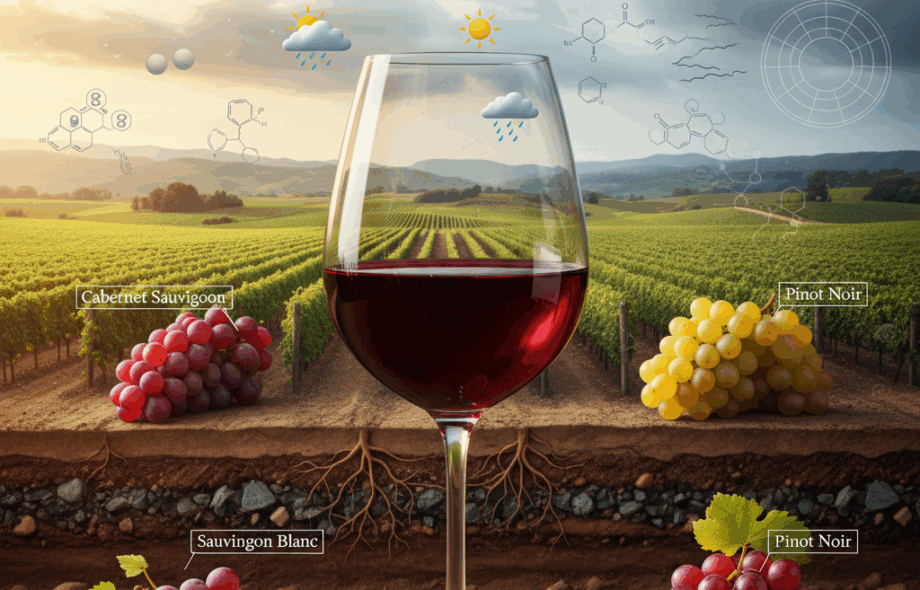
Wine isn’t just about the grapes; it’s about the environment in which they’re grown. Let’s explore how terroir, climate, and grape varieties work together to create distinct flavors.
What is Terroir?
- Terroir refers to the combination of soil, climate, and topography that influences how a vineyard’s grapes grow.
- Each wine region’s unique terroir contributes to the wine’s characteristics, from acidity to flavor profile.
The Role of Climate
- Warm climates tend to produce wines with higher alcohol content and fuller flavors.
- Cooler climates yield wines with more acidity and lighter flavors, often ideal for delicate varieties like Pinot Noir.
Grape Varieties
- Cabernet Sauvignon thrives in warm climates like Napa Valley, producing bold, tannic wines.
- Pinot Noir requires a cooler climate, as seen in regions like Burgundy and Oregon’s Willamette Valley, to develop its nuanced flavors.
📥 Download Vinora – Your Companion in the World of Wine
📱 iOS: Vinora on iOS
📱 Android: Vinora on Android
📸 Follow Us for Updates
Instagram: @vinora_official
Pinterest  :
https://in.pinterest.com/vinora_official/
:
https://in.pinterest.com/vinora_official/
 :
https://in.pinterest.com/vinora_official/
:
https://in.pinterest.com/vinora_official/
Service/Product Details:
https://www.vinorawine.com/