
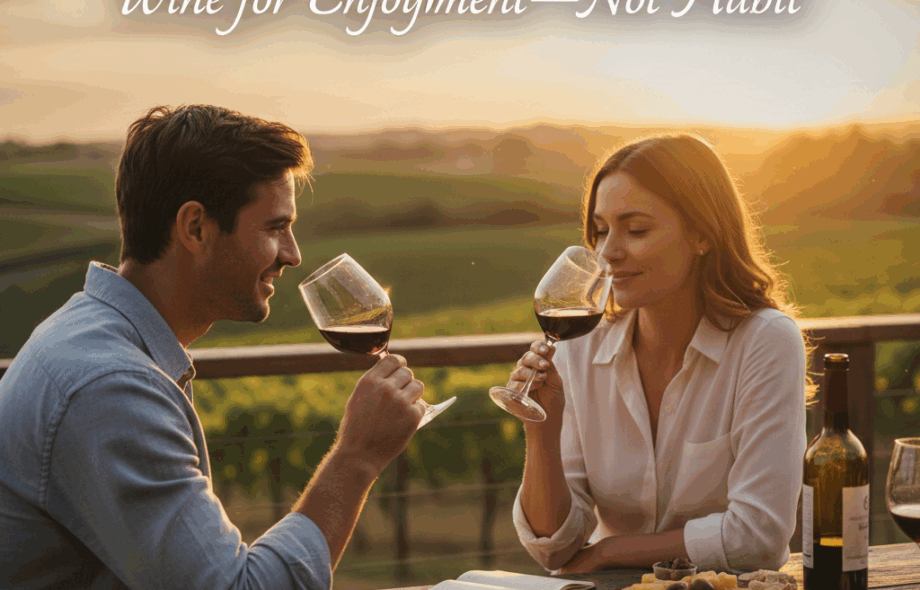
Wine can be enjoyed in many ways. For some, it is part of celebration. For others, it is a way to relax after a long day. Over time, however, wine can quietly shift from something you enjoy to something you drink out of habit. This change is subtle and often goes unnoticed. Understanding the difference between enjoyment and habit helps you build a healthier, more meaningful relationship with wine.
This guide explains how to recognise the difference and how to return wine to a place of intentional enjoyment.
Enjoyment Is a Choice, Habit Is Automatic
Enjoyment involves intention. You choose to drink wine because you want the experience-the taste, the moment, the feeling. Habit happens automatically. You drink without thinking about why.
When wine becomes habitual, attention fades. The glass is poured without curiosity or presence. Enjoyment decreases even if consumption continues.
Recognising this difference is the first step toward change.
Signs You’re Drinking Wine for Enjoyment
When wine is enjoyed intentionally, certain signs appear:
- You look forward to the moment
- You pay attention to taste and feeling
- One glass often feels enough
- You remember the experience clearly
Enjoyment feels conscious and satisfying. Wine feels like a moment, not a routine.
Signs Wine Has Become a Habit
Habitual drinking often looks different:
- Wine is poured without thought
- The experience feels rushed or dull
- Quantity matters more than quality
- The moment is easily forgotten
This does not mean something is “wrong,” but it does mean enjoyment may be fading.
Why Habits Form Easily
Habits form because wine is accessible, comforting, and socially accepted. It becomes part of routine-after work, during dinner, or before sleep.
Comfort itself is not a problem. The issue arises when awareness disappears. Without awareness, enjoyment fades and habit takes over.
Why Enjoyment Feels Better Than Habit
Enjoyment brings satisfaction. Habit brings repetition. When wine is enjoyed intentionally, less often feels like more.
Enjoyment allows you to appreciate wine’s character and the moment it creates. Habit simply fills time.
Slowing Down Changes Everything
Slowing down is the easiest way to shift from habit to enjoyment. This does not mean drinking less immediately-it means paying attention.
Pouring wine more slowly, taking the first sip mindfully, or pausing between sips can transform the experience.
Asking Yourself Simple Questions
You do not need deep reflection. Simple questions help:
- Do I want this glass, or is it automatic?
- Am I enjoying this moment?
- Would one glass be enough right now?
These questions bring awareness back without judgment.
Choosing Wine Intentionally
Choosing wine intentionally-even a familiar one-changes the experience. When you select wine with care, enjoyment increases.
This choice reconnects you with your preferences and breaks automatic behavior.
Enjoying Wine Less Often, But More Fully
Enjoyment does not require frequency. Drinking wine less often but with intention often feels more rewarding.
This approach allows wine to remain special rather than routine.
Letting Go of Guilt and Judgment
Awareness should never come with guilt. Habit happens naturally. The goal is not restriction but reconnection.
Wine should feel positive-not monitored or judged.
Reframing Wine as an Experience
When wine is seen as an experience rather than a habit, its role changes. It becomes something you enter rather than something you consume.
This reframing restores meaning and enjoyment.
Creating Space Between Moments
Spacing wine moments apart helps reset awareness. Even short breaks can renew curiosity and appreciation.
Distance often brings clarity.
Returning Wine to Its Right Place
Wine does not need to disappear to regain value. It simply needs intention.
When chosen consciously, wine becomes enjoyable again-without excess or pressure.
Conclusion
Wine is best enjoyed when it is chosen, not automatic. Understanding the difference between enjoyment and habit helps you reconnect with what makes wine meaningful.
By slowing down, paying attention, and choosing intentionally, wine returns to its rightful place-as a moment of pleasure, not a routine. When enjoyed this way, every glass feels purposeful, satisfying, and worth remembering.
📥 Download Vinora – Your Companion in the World of Wine
📱 iOS: Vinora on iOS
📱 Android: Vinora on Android
📸 Follow Us for Updates
Instagram: @vinora_official
 :
https://in.pinterest.com/vinora_official/
:
https://in.pinterest.com/vinora_official/